Published in the Fall 2026 Quarterly Newsletter
Across higher education, food insecurity remains one of the most critical yet invisible barriers to student health, retention, and academic success.
National survey data underscores the depth of this challenge across participating campuses: 43.4% of student respondents in the Spring 2026 ACHA-NCHA survey reported low or very low food security (assessed via the USDA US Household Food Security Survey Module: Six-Item Short Form).
A lack of food and housing security places immediate pressure on a student’s academic focus, mental health, and path toward graduation. On campus, that statistic can translate to a quiet, daily calculus that many students perform—deciding whether to buy required textbooks, pay rent, or purchase groceries.
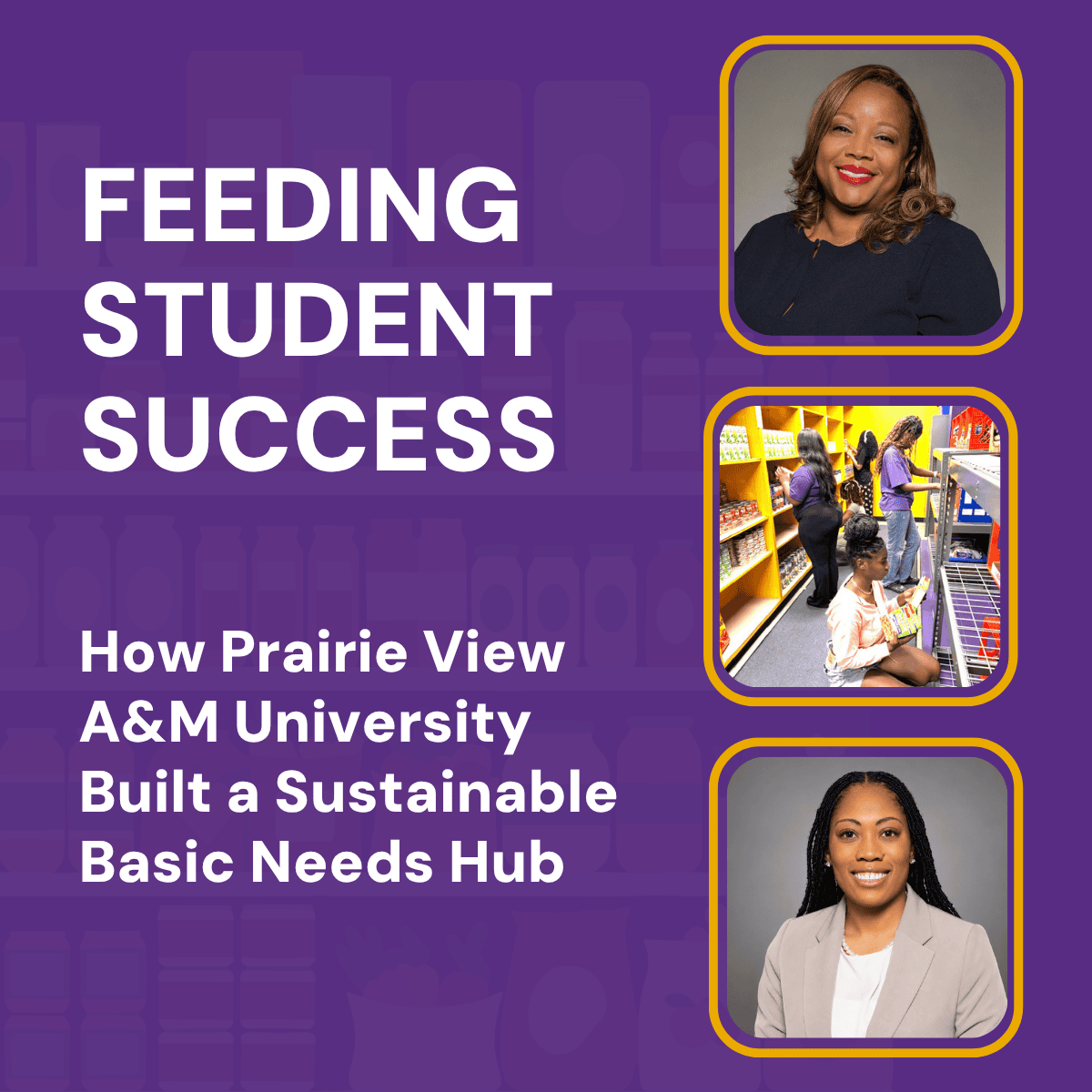
Recognizing how easily sudden, unexpected expenses could interrupt a student’s education led Prairie View A&M University to make basic needs security a core student success priority. What began as a targeted effort to prevent financial hurdles from interrupting an education evolved into the Hilltop Reserve Pantry—a thriving basic needs hub designed to reduce food insecurity while promoting student success.
Below, Tondra L. Moore, PhD, JD, MPH, Executive Director of Student Health Services and Clinical Associate Professor at Prairie View A&M University reflects on how the initiative started, how it expanded as student needs grew, and how student volunteers became its driving force.

Tondra L. Moore, PhD, JD, MPH
When I joined the university in 2018, one of my charges was to help create an emergency resource center for students. The request was grounded in data available at the time showing that an unexpected expense of $500 could be enough to cause a student to stop out or drop out. That reality made the need clear: students must have reliable access to basic resources so they could remain enrolled, supported, and focused on their academic success.
Launching the Hilltop Reserve was not difficult because Health Services staff immediately understood the importance of fulfilling students’ unmet needs. The greater challenge was learning how to expand as those needs grew.
Fortunately, initiatives such as the Panther Pride Drive helped us intentionally connect with university alumni, resulting in consistent support and expanded access to new resources. Programs such as March Madness, where we created specially curated boxes for students, also helped destigmatize the use of resources addressing food insecurity. With a social worker leading day-to-day operations, the Hilltop Reserve was able to connect students to wraparound services and case management, including specialized support for medical needs, housing insecurity, and other barriers that could affect their ability to thrive.
One of Hilltop Reserve’s greatest successes has been the strong and consistent support of student volunteers. Each year, students are redirected to other campus programs because the Hilltop Reserve has reached volunteer capacity. Their pride in serving their classmates reflects the very best of our campus community and supports our continued commitment to developing responsible global citizens.
Overall, our approach has been centered on meeting everyday life needs so students can focus on academic success in an environment where seeking help is normalized and serving others is valued.
–Tondra L. Moore, PhD, JD, MPH, Prairie View A&M University
Scaling a campus pantry into a sustainable, multi-faceted resource requires turning a high-level vision into strategic, long-term impact.
To explore how the Hilltop Reserve builds donor partnerships, breaks down stigma, and meets students’ evolving basic needs, we interviewed Meaquell Lewis, PhD, MSW, Director of the Student Life Resource Center at Prairie View A&M University.
In the Q&A below, Dr. Lewis breaks down how the program operates, the difference it’s making for students, and takeaways for other institutions looking to build similar support systems.
Q: Can you tell us a bit about your role, and how the unique mission, culture, and community of an HBCU shape the way you approach student health and well-being?

Meaquell Lewis, PhD, MSW
A: As Director of the Student Life Resource Center at Prairie View A&M University, I oversee several student support initiatives designed to remove barriers to student success; these initiatives include Hilltop Reserve Pantry, Parent and Family Programs, Panther Fostering Success, and other basic needs initiatives. My work centers on ensuring that every student has equitable access to the resources necessary to thrive academically, personally, and professionally.
Serving at an HBCU makes this work especially meaningful. HBCUs have historically served students with resilience, compassion, and an unwavering commitment to educational access. Our students often balance academics with employment, family responsibilities, financial hardships, and other life challenges. We recognize that student success extends beyond the classroom. Supporting students’ basic needs is not separate from education; it is foundational to education. Our approach reflects a culture of care where students are treated with dignity, relationships matter, and every individual is seen as deserving of support and opportunity.
Q: ACHA-NCHA data suggests that food insecurity affects a significant segment of college students. From your perspective, what does the reality of food insecurity look like for students today, and why is it such a critical issue for higher education leaders to understand?
A: Food insecurity is far more common than many people realize. It is not limited to students experiencing homelessness or extreme poverty. Many students are forced to choose between purchasing textbooks, paying rent, buying gas, or purchasing food.
For some students, fewer meals become routine. Others reduce portion sizes or rely on inexpensive foods with little nutritional value simply to make it through the week. When students are hungry, they cannot fully engage in learning. Hunger impacts concentration, memory, mental health, energy levels, attendance, and overall well-being. If higher education is committed to student persistence and graduation, then addressing food insecurity must become part of institutional student success strategies rather than viewed solely as emergency assistance.
Q: How does food insecurity generally impact a student’s ability to focus, attend class, or feel like they belong and can succeed on campus?
A: The impact reaches every aspect of the student experience. When students are worried about their next meal, academics naturally become secondary. Hunger affects concentration, participation, decision-making, emotional well-being, and motivation.
Food insecurity also creates isolation and can be mentally draining. Students may avoid social activities because they cannot afford meals with friends or feel embarrassed discussing their circumstances.
By reducing this burden, we allow students to redirect their energy toward learning, building relationships, and fully participating in campus life.
Q: Food insecurity can often be an invisible struggle on college campuses. Before you launched your current initiative, what specific warning signs or challenges regarding food access were you noticing among your student population?
A: Students shared that their food supplies were often running low because they had to prioritize paying rent, utilities, and other essential bills, leaving little money to quickly restock groceries. Others stretched what food they had over several days or relied on the campus pantry and meal swipes generously shared by friends after exhausting their own meal plans.
With the rising cost of food, housing, and other necessities, many students have been forced to make difficult financial decisions simply to remain enrolled. Some have taken on additional jobs or worked longer hours to afford groceries, often at the expense of their academic performance and personal well-being. Others who live off campus have chosen to decline a campus meal plan so they could maximize their financial aid refunds to cover rent, utilities, and other housing expenses. While this decision may help them secure stable housing, it often leaves them with limited resources to purchase nutritious food or even basic snacks throughout the semester.
One of the greatest challenges was that many students were hesitant to seek help not because the need wasn’t real, but because they didn’t want to be perceived as a burden or defined by their circumstances. Many shared that they did not want others to feel sorry for them or view them differently because they were experiencing financial hardship. They simply wanted the opportunity to be seen as any other student focused on earning their degree, participating in campus life, and pursuing their goals without their basic needs becoming the focus of their college experience. This hesitation often prevented students from seeking assistance until their situations became critical.
Those conversations reinforced that food insecurity was not an isolated issue, it was affecting students across multiple populations and underscored the need for a comprehensive, compassionate approach that addresses students’ basic needs as an essential component of their overall health, well-being, and academic success.
Q: To directly address food insecurity and better support your students, what program(s) or initiative(s) did your campus implement, and how does it operate?
A: Prairie View A&M University established Hilltop Reserve Pantry as a comprehensive basic needs resource designed to reduce food insecurity while promoting student success. Students can access nutritious food, fresh produce, frozen items, refrigerated foods, hygiene products, and other essential household supplies in a welcoming environment that protects dignity and privacy.
Beyond food distribution, Hilltop Reserve provides nutrition education, healthy cooking demonstrations, community resource referrals, emergency assistance navigation, and partnerships that connect students with additional support services. Our goal has never been to simply provide food; it has been creating stability.
Q: Building a successful campus resource usually requires a village. What did the process of getting this initiative off the ground look like, and did you look to any unique partnerships or stakeholders to help make it a reality?
A: Hilltop Reserve exists because of collaboration. We have built strong partnerships with alumni, donors, local food banks, nonprofit organizations, campus departments, student organizations, faculty, staff, corporate partners, and community volunteers. Our alumni continue to demonstrate that supporting current students remains an important part of giving back to Prairie View A&M University.
Every donation, whether food, financial support, volunteer time, or professional expertise, helps ensure students have one less barrier standing between them and graduation.
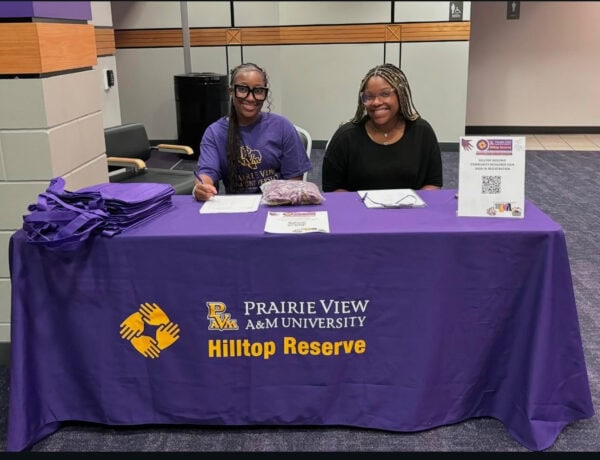
One of Hilltop Reserve’s greatest successes has been the strong and consistent support of student volunteers. Hilltop Reserve exists because of collaboration and strong partnerships, including with student and community volunteers.
Q: What were the biggest roadblocks or resource constraints your team faced when you first set out to tackle food insecurity?
A: Like many institutions, our greatest challenge was sustainability. Demand consistently exceeded available resources. While there was significant passion to help students, we needed consistent food donations, funding, bigger storage capacity and spacing for increase in supplies, and community partnerships to meet growing needs.
Fortunately, Hilltop Reserve has been strengthened through generous alumni, community organizations, corporate partners, local food banks, and philanthropic supporters who continue investing in our students. Their support has transformed what could have been a short-term initiative into a sustainable campus resource.
Q: How did resources, data, or frameworks from the broader college health field—such as ACHA—help you validate the need to address food insecurity or shape your overall strategy?
A: Organizations like ACHA have helped elevate food insecurity from an isolated student services issue to a national public health concern. National research validated what we were already seeing on our campus: that food insecurity directly impacts physical health, mental health, academic achievement, and persistence.
Using national data alongside our campus utilization trends allowed us to build stronger institutional support and develop programming grounded in evidence rather than assumptions.
Q: How have you seen this program alleviate the daily burden of food insecurity so students can better focus on their education?
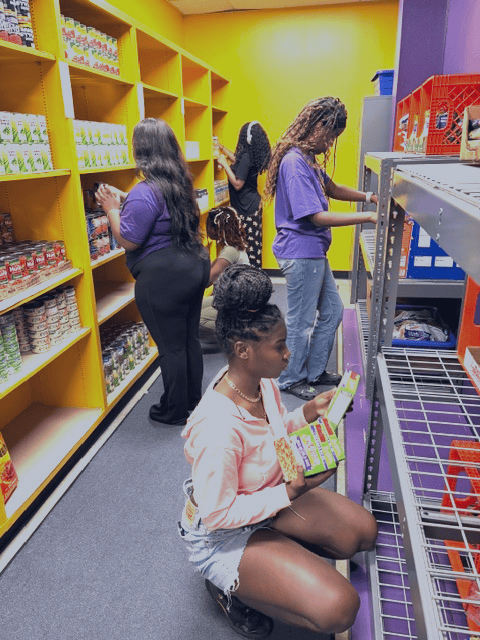
As Hilltop Reserve experiences a increases in student utilization, it continues to expand the variety of food available to students.
A: Students frequently tell us that simply knowing Hilltop Reserve is available gives them a sense of reassurance. It provides peace of mind that support is always accessible when needed, easing the stress and uncertainty of not knowing where their next meal or essential items will come from.
Instead of worrying about whether they will have enough food through the weekend or before financial aid is disbursed, most students know they have somewhere to turn. During the past academic year, Hilltop Reserve experienced a significant increase in student utilization while also expanding the variety of food available, including fresh produce, refrigerated items, frozen foods, and healthier options. Every visit represents one less obstacle preventing a student from succeeding academically.
Q: Are there any particular moments, student stories, or pieces of feedback that stick out to you as a sign that you are moving the needle on food security for your students?
A: The stories that stay with me are often the simplest. Students have shared that without Hilltop Reserve, they would have gone without meals. Many have expressed that the pantry eases the financial burden of purchasing groceries, allowing them to use their limited resources for rent, utilities, transportation, and other essential expenses. For some, this support has helped them avoid housing instability and remain enrolled rather than leaving school because of financial hardship. Those moments remind us that behind every statistic is a student whose educational journey was strengthened because someone cared enough to help.
Q: Beyond the day-to-day logistics, how has this program changed the conversation on your campus about food security being a core component of student well-being and academic success?
A: There has been a significant cultural shift. Food security is no longer viewed solely as emergency assistance; it is recognized as an essential component of student health, wellness, retention, and graduation. Campus departments now proactively refer students, faculty openly discuss available resources, and community partners actively seek opportunities to support Hilltop Reserve. That level of institutional engagement demonstrates that addressing basic needs has become part of our student success strategy.
Q: How has the evolution of this program empowered your team or shifted your capacity to serve the campus community?
A: As Hilltop Reserve has grown, our team has expanded beyond food distribution to comprehensive student support. We now provide healthy cooking demonstrations, nutrition education, community referrals, outreach initiatives, and collaborative events designed to reduce stigma while increasing resource awareness. Our increased partnerships and donor support have allowed us to think beyond immediate needs and invest in long-term student well-being.
Q: For other campus health professionals looking to move the needle on food insecurity, what is the biggest lesson you’ve learned that you’d share with them?
A: Start by listening to students. Students understand their challenges better than anyone else. Build partnerships early, remove stigma intentionally, and remember that food security is everyone’s responsibility, not just one department. No single office can solve food insecurity alone, but an entire campus working together absolutely can.
Most importantly, treat students with dignity. Every interaction should reinforce that seeking help is a sign of strength, not weakness.
Q: Looking ahead, how can national organizations like ACHA continue to amplify and support the front-line work being done to address food insecurity on your campus?
A: National organizations play an essential role in advancing this work. ACHA can continue advocating for food insecurity as a public health priority by expanding research, providing evidence-based best practices, facilitating collaboration among institutions, and elevating successful campus models that can be replicated nationwide.
Continued advocacy at the national level also helps institutions secure funding opportunities, strengthen policy discussions, and reinforce that addressing students’ basic needs is not simply an act of compassion; it is an investment in student success, health, and educational equity. Ultimately, when organizations like ACHA amplify this work, they help ensure that every student, regardless of financial circumstance, has opportunities to learn, graduate, and thrive.
Post Type
Articles, Quarterly Newsletter Articles