

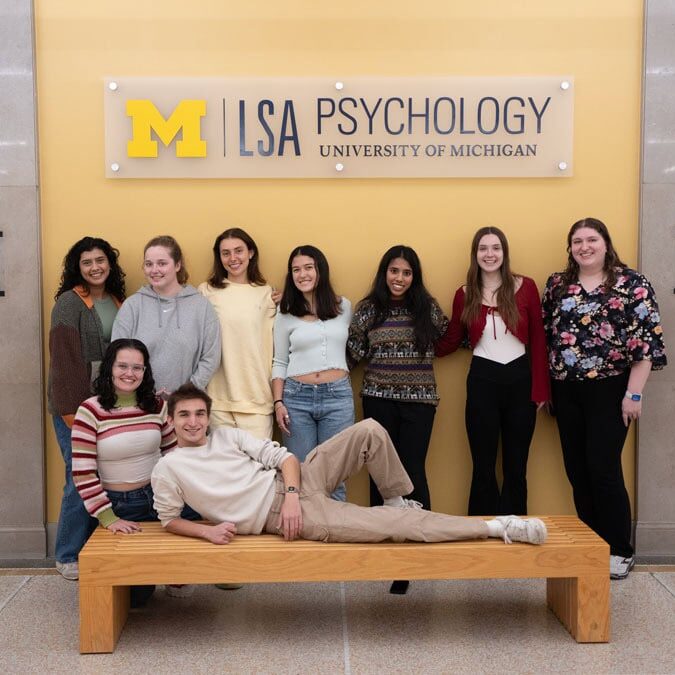
In 2024, Elena Pokowitz, MEd, MS, TLLP, graduate student supervisor in the ACCESS Lab (Advancing Community Competence in Exposure Skills & Strategies) at University of Michigan, Ann Arbor, received ACHF’s Stephan D. Weiss Student Mental Health Award for her project “Mood Lifters for Undergraduates Program.”
Elena submitted the following executive summary for the project:
In 2020, approximately 30% of college-aged young people (age 18-25) experienced mental illness (CBHSQ, 2021). This stays constant regardless of demographics and is the largest proportion of mental illness experienced across any adult age group, which is a trend that has remained consistent over the last twenty years (Xiao et al., 2017). It has been posited that this pattern is due to the unique stressors associated with life transitions that occur during this age period (Auerbach et al., 2018; Beiter et al., 2015). Unfortunately, fewer than 50% of young adults who experienced mental illness in 2020 pursued and participated in treatment, a trend that is expected to continue (CBHSQ, 2021).
Mood Lifters is a peer-led, low-cost, group care model designed to bring evidence-based mental healthcare to the masses. Mood Lifters is biopsychosocial and dimensional, showing positive results for those across the spectrum of symptom severity.
Between Fall 2023 and Spring 2025, the ML-UP program expanded access to free, evidence-based mental health care for college students across America, serving 141 individuals through the generosity of the Stephan D. Weiss Student Mental Health Award and matched departmental funding. Across five cohorts, 95 participants were offered immediate treatment and 46 were assigned to a waitlist comparison group, allowing for a rigorous evaluation of the program’s impact long-term.
Primary clinical outcomes demonstrated meaningful benefits for participants who completed ML-UP. Students who completed the program showed significant reductions in both depressive and anxiety symptoms across the semester of their participation, while students on the waitlist experienced significant symptom increases over the same period. This pattern suggests that ML-UP not only alleviated distress among participants, but also that it buffered against the typical worsening of mental health symptoms observed in undergraduate students during the academic term.
Exploratory analyses further indicated improvements in psychological well-being, with ML-UP participants demonstrating larger gains in flourishing than those on the waitlist. Trends also suggested reductions in automatic negative thoughts among treatment participants, while waitlisted students showed increases—pointing to promising cognitive changes aligned with the program’s CBT-informed framework.
Participant qualitative feedback highlighted strong acceptability and engagement. Students consistently emphasized the program’s practical skill-building, inclusive group environment, and interactive format. While some noted challenges related to time demands and the limits of virtual delivery, others emphasized that the online format was essential for access and that group leaders effectively fostered connection and participation.
Overall, the ML-UP program successfully increased access to care, reduced anxiety and depression, and promoted well-being among students, demonstrating a meaningful return on investment for funders and a strong potential for continued dissemination in the future.
References:
Auerbach, R. P., Mortier, P., Bruffaerts, R., Alonso, J., Benjet, C., Cuijpers, P., Demyttenaere, K., Ebert, D. D., Green, J. G., Hasking, P., Murray, E., Nock, M. K., Pinder-Amaker, S., Sampson, N. A., Stein, D. J., Vilagut, G., Zaslavsky, A. M., Kessler, R. C., & WHO WMH-ICS Collaborators (2018). WHO World Mental Health Surveys International College Student Project: Prevalence and distribution of mental disorders. Journal of abnormal psychology, 127(7), 623–638. doi:10.1037/abn0000362
Beiter, R., Nash, R., McCrady, M., Rhoades, D., Linscomb, M., Clarahan, M., & Sammut, S. (2015). The prevalence and correlates of depression, anxiety, and stress in a sample of college students. Journal of affective disorders, 173, 90–96. doi:10.1016/j.jad.2014.10.054
Campbell, A., Converse, P. E., & Rodgers, W. L. (1976). The quality of American life: Perceptions, evaluations, and satisfactions. Russell Sage Foundation.
Center for Behavioral Health Statistics and Quality. (2021). 2020 National Survey on Drug Use
and Health (NSDUH): Methodological summary and definitions. Rockville, MD: Substance Abuse and Mental Health Services Administration. Retrieved from https://www.samhsa.gov/data/
Xiao, H., Carney, D. M., Youn, S. J., Janis, R. A., Castonguay, L. G., Hayes, J. A., & Locke, B. D. (2017). Are we in crisis? National mental health and treatment trends in college counseling centers. Psychological services, 14(4), 407–415. doi:10.1037/ser0000130
About this Award
Sponsored by the Stephan D. Weiss Foundation and the American College Health Foundation, this award provides $5,000 in funding—matched by $5,000 from the recipient’s institution—to support innovative mental health initiatives.
The award empowers students to develop creative, replicable programs that improve service delivery and student retention. By addressing mental health challenges that threaten academic success, these initiatives help ensure that students remain on the path to graduation.
Want to support our efforts to promote well-being on campus? Your donations to the ACHF General Fund enable us to offer this award and fund other projects that impact campuses’ ability to promote student well-being.