


Meet Our Donors
Meet some of the Foundation Donors who champion college health through their passion and generosity.
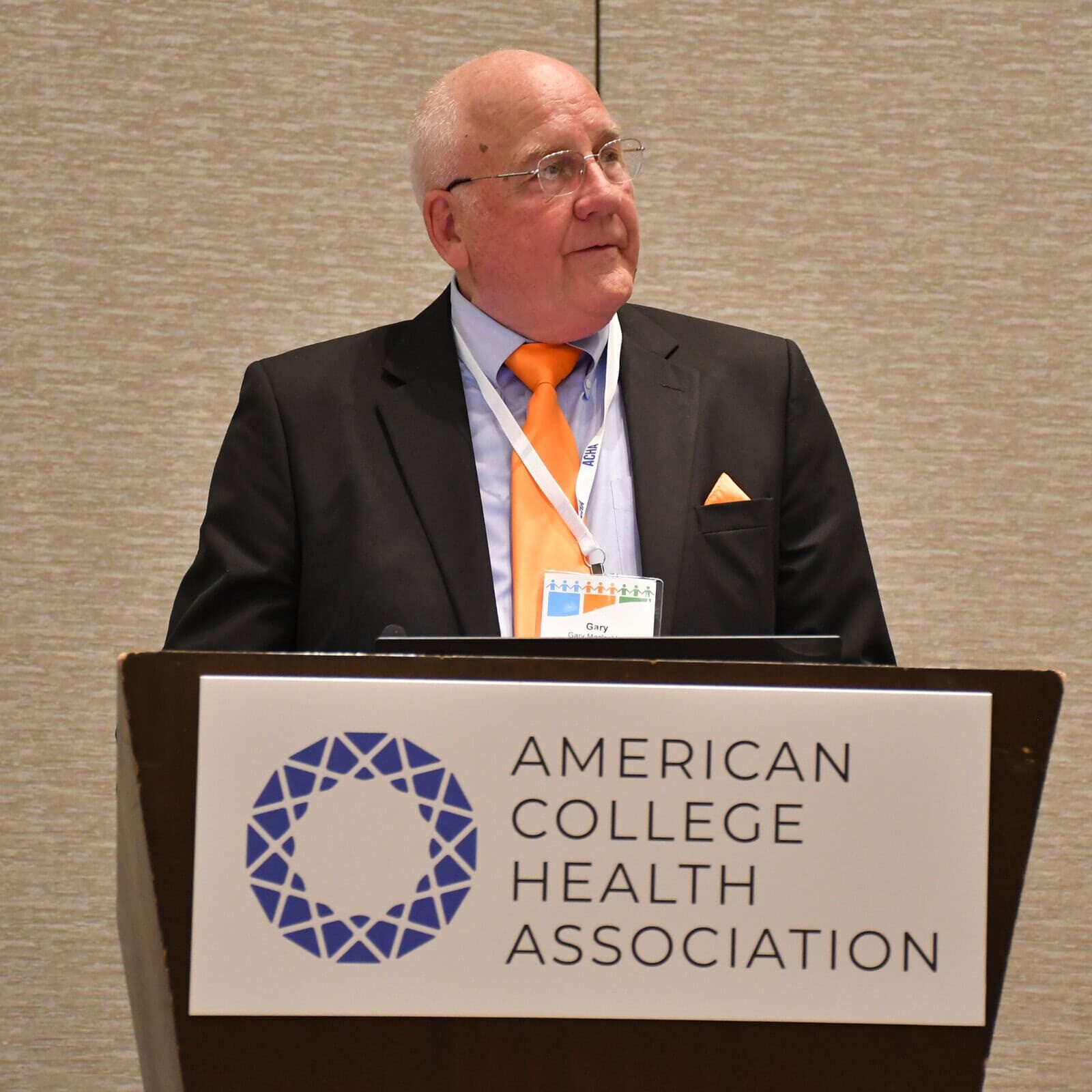
Gary MacLachlan
Gary and his wife Kathleen (Kathy) MacLachlan have been long-time supporters of ACHA and ACHF. In December 2018, Kathy passed away, and in 2019, the MacLachlan family created the ACHF Kathy Mac Scholar Funding Opportunity in her memory. The fund provides scholarships to nurse and nurse practitioners to partially offset travel expenses and ACHA Annual Meeting costs.
Gary is also member of ACHF’s Legacy Society and has named ACHF in his estate planning. In this donor spotlight, Gary shares why he supports ACHF.
Meet Gary MacLachlan
Please tell us about yourself.
I am a retired public parks administration for Onondaga County NY and New York State. I also am a retired career Fire Chief with the DeWitt Fire District, NY. I received my Master’s in Public Administration from The Maxwell School - Syracuse University. Our three children inherited Kathy's genes in the health care service. Our son Tim has a PhD. He is St. John Fisher/Jefferson Health’s Executive Director/Head of Cardiovascular and Metabolism at Novartis Institutes for Biomedical Research in Cambridge, MA. Our son Gavin has a Master’s in Special Education from Syracuse University. He is a Special Education teacher in the Syracuse City School District. Our daughter Kelley has a Master’s in Social Work from Syracuse University. She is a LSMW Social Worker at Mary Cariola Children’s Center in Rochester NY.
Kathy's nursing legacy started as a surgical floor nurse at Upstate Medical Center in Syracuse then transitioned to 38 years as a Nurse Practitioner in Women’s Health at the Syracuse University Student Health Center. Along the way she was President of NYSCHA and a Board Member of ACHA and a Fellow.
How would you describe your personal mission or philosophy?
I believe my " personal philosophy" is kindness towards all. My " mission" throughout life and my careers has been to organize groups of individuals towards achieving the goal of working positively together to achieve outcomes that benefit society in general.
What first inspired you to support the Foundation? What does it mean to you to support the Foundation and ACHA?
Obviously, my inspiration was, and always has been, my wife of 49 years Kathleen (Kathy Mac) MacLachlan - the consummate professional throughout her life and career. Memorializing her, through this endowment is, in my mind, the best way to carry on her legacy and to assure that college health care professionals are exposed to the benefits of continuing education that will endeavor to make their college health experience a healthy and positive one.
How do you feel when you make a gift to the Foundation?
Proposing this endowment to ACHF, along with our three children, seemed like the most guaranteed way to both preserve Kathy's memory and professional achievements but also to allow us to feel like a continuing positive impact will touch college students back home at their respective institutions.
What do you hope to accomplish through your philanthropy?
We want, and hope, that there will be a "forever" annual benefit to college health professionals who are able to attend the ACHA conference and come away with jewels of new knowledge that they can transfer to their students back home at their institutions.
What would you tell someone who is thinking about donating to the Foundation?
Besides personal time contributions, I feel that, if plausible, financial contributions to a particular cause that expands upon missions are the best was to put a mark upon something you believe in.
Our experience of creating the endowment was flawless and comfortable. The ACHA Executive Director along with the ACHF committee entertained us at the national headquarters in Maryland, answering all our questions and laying out the route to successfully creating the endowment.
What would you tell someone who is thinking about volunteering with ACHA or ACHF?
Volunteering with ACHA or ACHF can not only expand your own horizons or outcomes you may have only dreamed of - but will add to the collective wealth of experience and knowledge of those who already serve on the numerous volunteer committees that make ACHA great.
What is your favorite memory with ACHA?
My favorite memory is being present at my wife's induction as a Fellow of ACHA at the 2008 Orlando Conference. Making it even more special was the surprise arrival of all three of our children at the event.
What makes you hopeful for the future?
What makes me hopeful for the future is ........ knowledge of the past and how society always survives and prospers. I guess that's called FAITH.
What is a fun fact about you?
My kids joked about what might be my answer to the question. I told them it would be difficult because there are so many - LOL. I can be a funny guy. One fun fact: I am an impulsive spell checker and proofreader, so pity on those who can't spell or use grammar appropriately. Another is I always have an opinion .... and it's always right 😊. Finally, at 6' 6" tall, I am always in the back row for pictures -- also, being tall is not all it's cracked up to be ( ask Dr. Ralph Manchester). I have scars on my head from short doorways
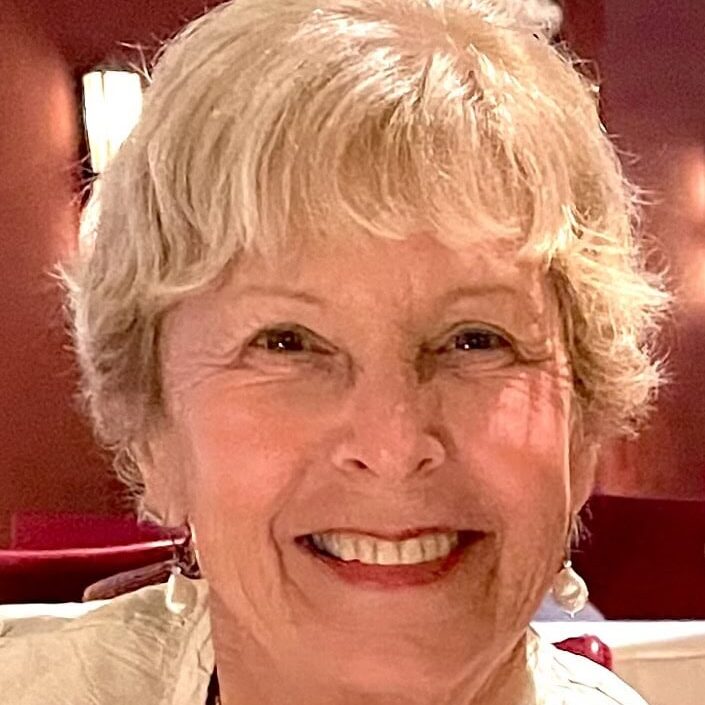
Gerri Taylor
Gerri Taylor worked in college health for 34 years at Bentley University in Waltham, Massachusetts, as a board-certified Adult Nurse Practitioner, Director of the Health Center and Associate Dean of Health, Counseling and Wellness. She is semi-retired but still focused on improving the quality of health services and care for college students through her work as a surveyor for Accreditation Association for Ambulatory Health Care AAAHC.
She has been a member of ACHA for more than 30 years. Most recently, she was co-chair of the ACHA COVID-19 Task Force.
Meet Gerri Taylor
Please tell us about yourself.
My name is Gerri Taylor. I worked in college health for 34 years at Bentley University in Waltham, Massachusetts, as a board-certified Adult Nurse Practitioner, Director of the Health Center and Associate Dean of Health, Counseling and Wellness and loved every minute of it. I was fortunate to be introduced to ACHA and NECHA (New England College Health Association) by my first Director at Bentley and soon began attending annual meetings of both organizations. I found wonderful colleagues, great support and incredibly invaluable information to increase my knowledge of college health and help me to be a better NP, director and associate dean. Every year, I brought back valuable information for my staff, my colleagues at Bentley and even the president, vice-presidents and trustees. They also came to appreciate the value of ACHA. ACHA/NECHA were often our lifelines in critical health situations. I learned more about ACHF, the foundation arm of ACHA and how it supported research and projects which could not exist without ACHF support. The sponsored programs provided models for all of us in supporting the health of our college students. I began involvement not only as a recipient of the good work of ACHA and ACHF, but also active in ACHA when I was asked to be a “member at large”, president of NECHA, the Chair of Program Planning for the annual ACHA meetings held in Washington DC and Orlando and then most recently Co-chair of the ACHA COVID-19 Task Force. Each of these positions helped me to learn more and more about college health and grow as a professional. I have made life-long friends who I treasure from all over the United States and I believe I could call on each one of them anytime! They have even supported my invitation to become a surveyor of college health centers for the Accreditation Association for Ambulatory Health Care, which I am now doing in semi-retirement. I am indebted to ACHA for its support and the support and friendship of my wonderful colleagues.
How would you describe your personal mission or philosophy?
When I earned my master’s degree as a nurse practitioner, I knew I wanted to work with college students. I believe that in most cases, college is the first time they need to deal with health situations on their own and that they should be provided with the best quality of health care, health promotion, counseling and support. My personal philosophy has always been to do whatever I can to improve the quality of health services and care for our college students. And in semi-retirement, I plan to do this through my work as a surveyor for AAAHC. I also hope to advocate for colleges to become accredited to ensure the quality of care they are providing and showcase that to their colleagues, families, presidents and trustees.
What first inspired you to support the Foundation? What does it mean to you to support the Foundation and ACHA?
I believe it is very important for each and every one of us to give back when able to an organization which has provided so much for us. I certainly could not have accomplished all I have for our students without ACHA and ACHF support. I think of the webinars, programs, education, collaborations – what I have gained from ACHA is immeasurable.
How do you feel when you make a gift to the Foundation?
I always feel good when donating to ACHF. I have donated to support the organization, to honor a colleague in memory for their work or to recognize a colleague for an accomplishment. There are so many reasons to make a donation for worthy causes and ACHF is near and dear to my heart and where I, as a college health professional, choose to make donations. I also believe that if EVERY attendee to our ACHA annual meeting would give even a small donation, ACHF would be able to provide funding for more projects and research that will provide new knowledge for all of us.
What do you hope to accomplish through your philanthropy?
I hope to improve the health environment, services and care for our students.
What would you tell someone who is thinking about donating to the Foundation?
Even a small donation means a lot – if only every member of ACHA would give a donation – it would fund some work that hard working college health professionals have done and allow them to share it with all of us. I have seen such great projects which have been replicated on campus after campus – the knowledge is shared and improves the health of college students even in very small colleges which do not have the funds to do this work on their own.
What would you tell someone who is thinking about volunteering with ACHA or ACHF?
With each volunteer opportunity with ACHA, I have wondered if I had the time in my schedule or if I could do it, but my parents always encouraged me to take risks and I took the risk and have never ever regretted it – each opportunity has helped me to learn, stretch and grow. And through it I have met life-long colleagues. It is so important to give back to these two organizations which have given us so much.
What is your favorite memory with ACHA?
My favorite memories of ACHA are the Zoom phone calls with our ACHA COVID-19 Task Force, a group of college health leaders, who represented the very BEST of our organization.
What makes you hopeful for the future?
Being with young people – teens and young adults – whose optimism for the future is contagious as they continue to ask questions, have new ideas and believe that anything is possible.
What is a fun fact about you?
That I love photography and my favorite photograph is one of a leopard coming down a hill in South Africa looking right at me!!
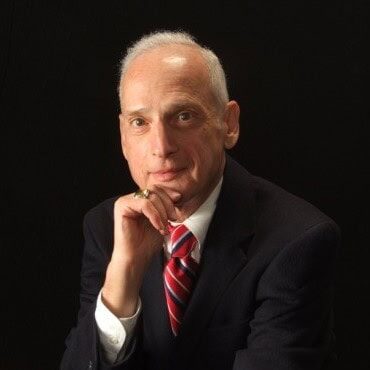
Stephan D. Weiss, PhD
Dr. Stephan D. Weiss most recently founded the Stephan D. Weiss, PhD, Mental Health Fund for Higher Education with ACHF, the largest individual gift in ACHF history. He also has two additional funds that support student mental health and well-being: The Stephan D. Weiss Student Mental Health Award and the Weiss Writing Prize.
Dr. Weiss is an ACHF board member and an avid supporter of the ACHF since his years as a graduate student. He resides in Cincinnati, Ohio.
Meet Dr. Weiss
1. What are you most proud of in your life?
I am proudest of the success of my philanthropic support of student wellness projects in higher education.
2. What was your first gift to philanthropy and why?
My first gift was to the University of Cincinnati Gardner Neuroscience Institute (UCGNI) capital campaign. UCGNI came to my attention in philanthropic discussions with the UCGNI Foundation. It was my introduction to non-program “giving” and led to other such capital “naming” philanthropic projects.
3. Why did you become such a philanthropist? What is your motivation for giving?
“Giving back” to those institutions that have fostered my academic and my professional opportunities has been the “mission” of my philanthropy.
4. What’s your favorite way to spend a weekend?
My favorite leisure activities include reading and catching up with my friends. My favorite local restaurants include “Bonefish,” Season’s 52” and “Trios” because I prefer menus that feature seafood, salads and seasonal choices. My entertainment choices include feature films, symphonic music and seasonal professional sports.
5. How do you want to be remembered?
I want to be remembered for my “gifts that keep on giving” in support of mental health in higher education.
6. What are you most proud of in your life?
I am proudest of overcoming the challenges of my childhood to turn “lemons into lemonade” in my lifetime.
7. Are there any books or other media that you would recommend?
Reading Difficult Conversations (D. Stone, , B. Patton & S. Heen) taught me the strategies of negotiating “win-win” outcomes in my personal and professional transactions in everyday life. My introduction to Difficult Conversations was “assigned reading” during my post - doctoral education in “conflict resolution” for my, especially for my consulting, teaching and working with professional organizations.
8. Favorite memory at an ACHA Annual Meeting?
My favorite ACHA Annual Meeting was when I was honored by the ACHF’s appointment of me to its Board of Managers in 2012 on which I have served since then.
9. The loss of your father greatly shaped your life. Would you share how the traumatic event at the age of 7 transformed you towards a life focused on mental health?
The death of my father on November 26, 1950, following his long-term illness dramatically affected my life as a 7-year-old. I was the youngest sibling of a brother(19 years old) and a sister (15 years old). The years following his death challenged my childhood and required my resilience to overcome it with the determination to override the traumatic effects of it on my family. That was accomplished with the help of my mental health support provided by the NYC “Board of Guardians” during my early childhood…the beginning of my “self -actualization!”
10. What are your guiding principles for making philanthropic decisions?
My “guiding principles” of philanthropic principles are that they are: 1. Personally meaningful 2. Adequately funded 3. Purposeful